


 English
 中文简体
 Español
 عربى
Industry News
How Does a Knapsack Mist Blower Distribute Liquid?
How Does a Mist Blower Work?
A mist blower uses airflow to transport liquid droplets toward the target area. Unlike conventional hand-operated sprayers that rely mainly on liquid pressure, this equipment combines a pumping or liquid-feeding mechanism with an air-generating system.
The engine drives a fan that produces a strong airflow. At the same time, liquid from the tank travels through a delivery pipe toward the discharge outlet. When the liquid reaches the nozzle area, it is dispersed into smaller droplets and carried by the moving air.
This combination allows the spraying material to travel beyond the immediate nozzle opening. The distribution pattern depends on several factors, including airflow speed, nozzle structure, liquid flow rate, and droplet size.
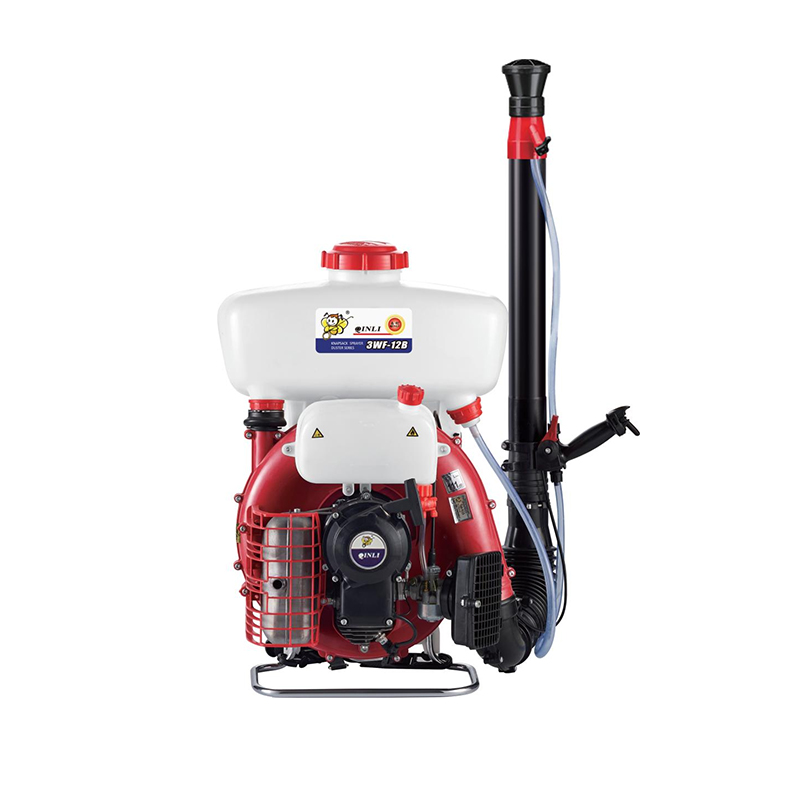
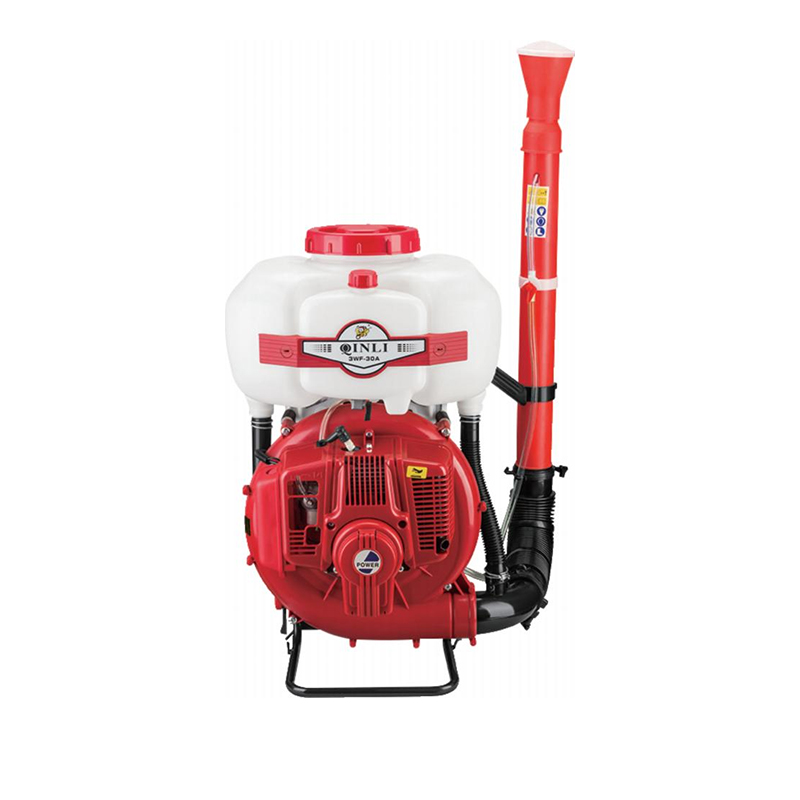
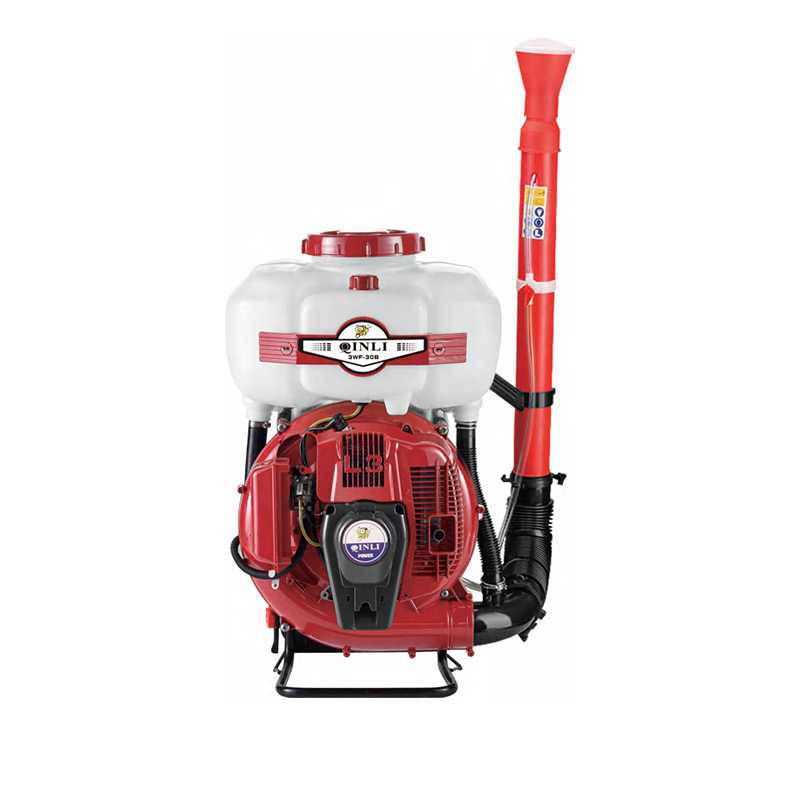
A Knapsack Mist Blower integrates these functions into a portable unit, making the coordination between the power system and spraying components an important part of its overall design.
Engine and Airflow System Design
The engine is a central part of a mist blower because it supplies power for airflow generation. Many portable models use gasoline engines, with engine displacement and power output selected according to the equipment configuration.
The fan converts engine power into moving air. Its blade shape, diameter, and rotational speed influence airflow volume and velocity. These characteristics affect how spraying droplets travel from the outlet to the target area.
Air duct design is another important consideration. The internal passage should guide airflow toward the discharge opening with limited unnecessary resistance. A properly arranged duct system helps coordinate the fan and nozzle during operation.
For manufacturers, integrating the engine and fan into a compact backpack structure involves balancing power transmission, component positioning, and overall machine dimensions.
Liquid Delivery and Droplet Distribution
The liquid delivery system determines how spraying material moves from the tank to the nozzle. Depending on the machine design, liquid may be delivered through gravity, pressure, or a dedicated feeding mechanism.
The nozzle then influences how the liquid is dispersed. Different nozzle openings and structures can produce different droplet characteristics and discharge patterns.
Droplet size is closely related to the interaction between liquid flow and airflow. Smaller droplets can be carried farther by moving air, while larger droplets generally have different movement and deposition characteristics.
A Knapsack Mist Blower therefore needs a coordinated liquid and airflow system. The relationship between these two systems influences the spraying pattern and operating performance.
Materials and Structural Manufacturing
The materials used in a mist blower influence its weight, structural strength, and compatibility with different operating components.
Plastic is commonly used for liquid tanks and selected external housings because it can be molded into lightweight shapes. Engine components and mechanical transmission parts generally use metal materials according to their structural requirements.
The backpack frame and supporting components also need to accommodate the combined weight of the engine, tank, and other assemblies. Their design affects how the machine sits against the operator's back.
Manufacturing involves processes such as plastic injection molding, metal machining, component forming, and mechanical assembly. Each process contributes to the final equipment structure.
Conclusion
The working principle of a Knapsack Mist Blower depends on the coordinated operation of its engine, fan, liquid delivery system, and spray nozzle. Each component contributes to airflow generation and liquid distribution, while materials and structural design influence the equipment's overall configuration. For B2B buyers, understanding these technical details provides a useful starting point for comparing models and communicating equipment requirements with manufacturers.
Recommended Products
- CONTACT DETAILS
-
- +86-13857697898
- +86-576-88121879
- export@qinlisprayer.com
- 18 Yanhai, sanjia Street, Jiao Jiang Dis, Taizhou city, Zhejiang, China
 Download Sample
- PRODUCT CENTER
- SEND A MESSAGE

